Blog
How to Use Hair Conditioner Properly | Complete Guide

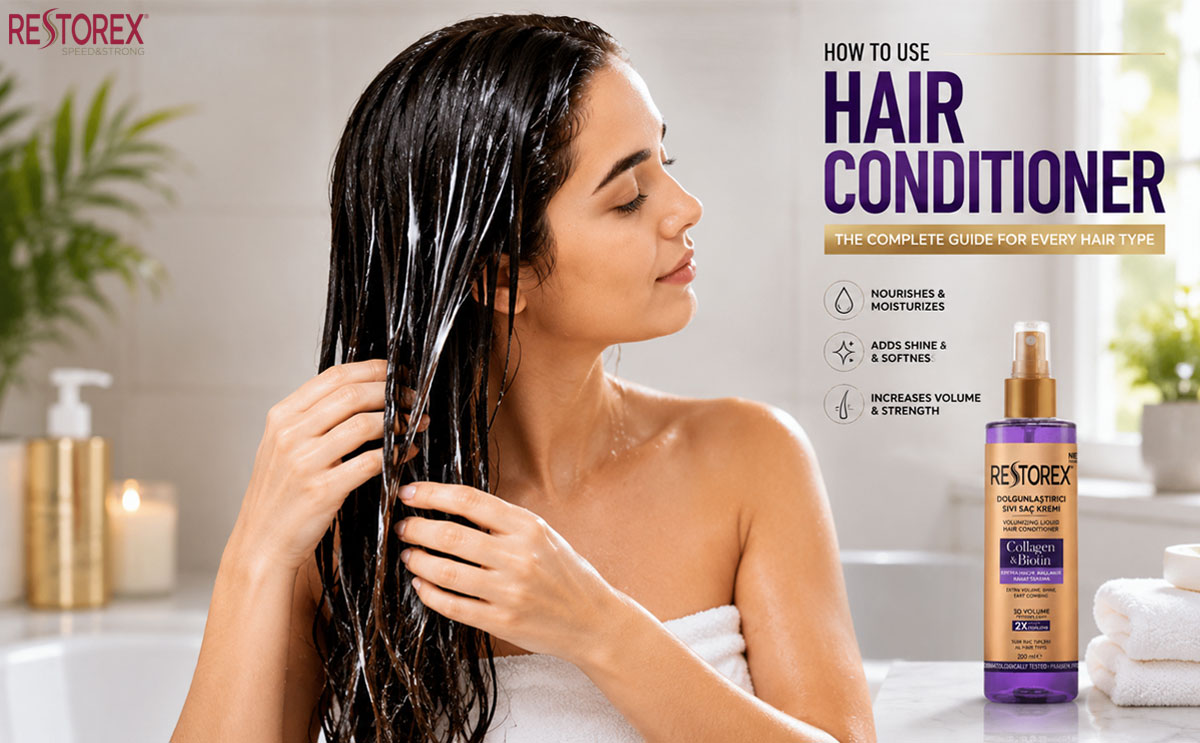
How to Use Hair Conditioner: The Complete Guide for Every Hair Type ( Hair Care Guide)
Healthy hair doesn’t depend only on choosing the right shampoo—it also depends on using hair conditioner correctly. Surprisingly, many people spend money on premium conditioners but still experience dry, rough, frizzy, or tangled hair because they apply conditioner the wrong way.
Whether your hair is straight, curly, oily, dry, damaged, color-treated, or chemically processed, learning how to use hair conditioner properly can make a noticeable difference in softness, shine, and manageability.
In this complete guide, you’ll discover:
- What hair conditioner actually does
- How to apply conditioner correctly
- Conditioner routines for every hair type
- Common mistakes to avoid
- Expert hair care tips
- Frequently asked questions
By the end of this article, you’ll know exactly how to get the best results from every wash.
What Is Hair Conditioner?
Hair conditioner is a moisturizing hair care product designed to improve the texture, softness, and strength of your hair after shampooing .
For additional hair care guidance, see the American Academy of Dermatology (AAD).
While shampoo cleans away dirt, sweat, oil, and product buildup, conditioner helps replace moisture that may be lost during cleansing.
A good conditioner can:
- Smooth the hair cuticle
- Reduce frizz
- Prevent tangles
- Improve shine
- Reduce breakage
- Make hair easier to comb
- Protect hair from environmental damage
Think of shampoo as the cleanser and conditioner as the moisturizer for your hair.
Why Is Hair Conditioner Important?
Many people skip conditioner because they think it makes hair oily.
In reality, skipping conditioner can leave hair:
- Dry
- Brittle
- Difficult to manage
- More prone to split ends
- More likely to break
Using conditioner regularly helps maintain the hair’s natural moisture balance, making it healthier over time.
Benefits of Using Hair Conditioner
- Restores Moisture
Conditioner replenishes moisture lost during shampooing.
- Reduces Hair Breakage
Well-conditioned hair is more flexible and less likely to snap during brushing.
- Controls Frizz
Conditioners smooth the outer hair layer, helping reduce flyaways and frizz.
- Improves Shine
Healthy, hydrated hair reflects more light, giving it a natural shine.
- Makes Hair Easier to Detangle
Conditioner reduces friction between strands, making combing much easier.
- Protects Hair
Some conditioners create a protective barrier against pollution, heat styling, and UV exposure.
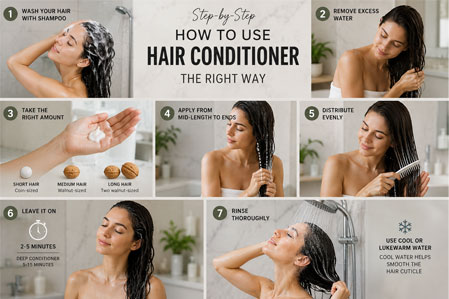
Step-by-Step: How to Use Hair Conditioner Correctly
Step 1: Wash Your Hair with Shampoo
Begin by cleansing your scalp thoroughly.
Choose a shampoo suitable for your hair type.
Step 2: Remove Excess Water
This is one of the most overlooked steps.
Hair that is dripping wet prevents conditioner from absorbing properly.
Gently squeeze excess water from your hair before applying conditioner.
Step 3: Take the Right Amount
Short Hair:
Coin-sized amount
Medium Hair:
Walnut-sized amount
Long Hair:
Two walnut-sized portions
Adjust depending on hair thickness.
Step 4: Apply from Mid-Length to Ends
Never apply regular conditioner directly onto the scalp unless the product specifically says it is scalp-safe.
Focus on:
- Mid lengths
- Hair ends
These areas are usually the driest.
Step 5: Distribute Evenly
Use:
- Fingers
- Wide-tooth comb
Ensure every strand is coated.
Step 6: Leave It On
Allow the conditioner to work.
Recommended time:
2–5 minutes
Deep conditioners:
5–15 minutes
Always follow product instructions.
Step 7: Rinse Thoroughly
Use cool or lukewarm water.
Cool water helps smooth the hair cuticle.
How to Use Conditioner for Every Hair Type
Dry Hair
Dry hair benefits most from rich, nourishing conditioners.
Tips:
- Condition every wash
- Leave on longer
- Use weekly deep conditioning
Oily Hair
People with oily hair should still use conditioner.
The key is using it correctly.
Tips:
- Apply only on ends
- Avoid scalp
- Choose lightweight formulas
Curly Hair
Curly hair naturally loses moisture faster.
Conditioning is essential.
Tips:
- Use generous amounts
- Finger-detangle while conditioning
- Deep condition weekly
Fine Hair
Choose lightweight conditioners.
Avoid heavy formulas that flatten volume.
Thick Hair
Thicker hair usually requires more product and longer conditioning time.
Color-Treated Hair
Color-treated hair needs extra moisture.
Look for conditioners that help protect color while improving softness.
Damaged Hair
Hair damaged by heat styling, bleaching, or chemical treatments benefits from conditioners containing nourishing ingredients that help improve softness and reduce breakage.
How Often Should You Use Hair Conditioner?
| Hair Type | Conditioner Frequency |
| Dry Hair | Every wash |
| Curly Hair | Every wash |
| Damaged Hair | Every wash |
| Fine Hair | 2–3 times weekly |
| Normal Hair | Every wash |
| Oily Hair | Every wash (ends only) |
Common Conditioner Mistakes
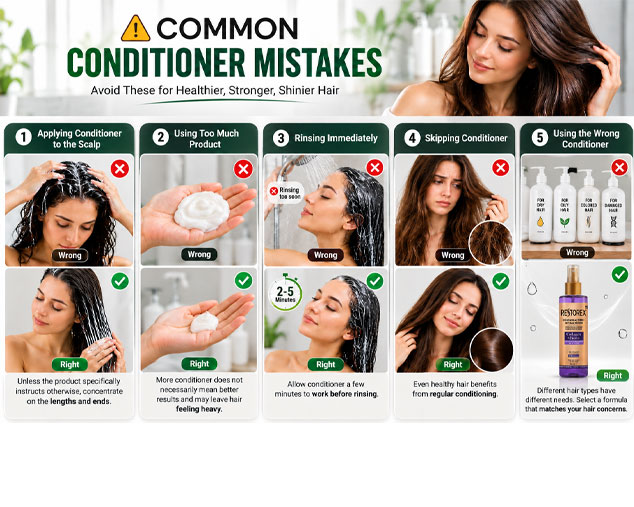
Applying Conditioner to the Scalp
Unless the product specifically instructs otherwise, concentrate on the lengths and ends.
Using Too Much Product
More conditioner does not necessarily mean better results and may leave hair feeling heavy.
Rinsing Immediately
Allow conditioner a few minutes to work before rinsing.
Skipping Conditioner
Even healthy hair benefits from regular conditioning.
Using the Wrong Conditioner
Different hair types have different needs. Select a formula that matches your hair concerns.
Ingredients to Look For
Quality conditioners often include:
- Collagen
- Biotin
- Aloe Vera
- Shea Butter
- Coconut Oil
- Panthenol (Vitamin B5)
- Hyaluronic Acid
- Natural plant extracts
These ingredients can help improve softness, hydration, and manageability depending on the formulation.
Can Men Use Hair Conditioner?
Absolutely.
Hair conditioner is suitable for everyone, regardless of gender. Anyone experiencing dryness, tangles, or roughness can benefit from regular conditioning.
Conditioner vs Hair Mask
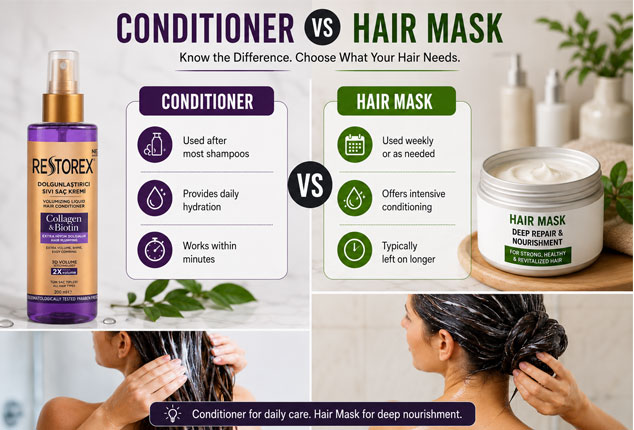
Conditioner:
- Used after most shampoos
- Provides daily hydration
- Works within minutes
Hair Mask:
- Used weekly or as needed
- Offers intensive conditioning
- Typically left on longer
Healthy Hair Habits That Complement Conditioning
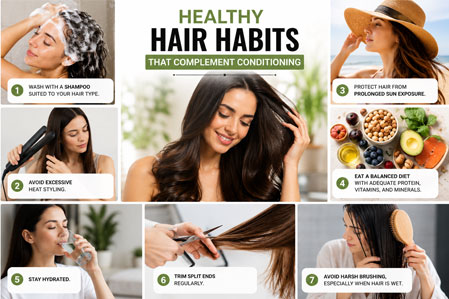
Using conditioner is only one part of a complete hair care routine. For healthier-looking hair:
- Wash with a shampoo suited to your hair type.
- Avoid excessive heat styling.
- Protect hair from prolonged sun exposure.
- Eat a balanced diet with adequate protein, vitamins, and minerals.
- Stay hydrated.
- Trim split ends regularly.
- Avoid harsh brushing, especially when hair is wet.
FAQS
How do you use hair conditioner correctly?
Apply conditioner to clean, damp hair from the mid-lengths to the ends. Leave it on for 2–5 minutes, then rinse thoroughly with lukewarm or cool water.
Should conditioner be applied to the scalp?
Most rinse-out conditioners are designed for the hair lengths and ends, not the scalp. Use scalp-specific products only if directed by the manufacturer.
How long should conditioner stay in your hair?
Most conditioners work best when left on for 2 to 5 minutes, while deep conditioners may require 5 to 15 minutes.
Can I use conditioner every day?
Yes, if you wash your hair daily and the conditioner suits your hair type. People with fine or oily hair may prefer lightweight formulas.
Is conditioner necessary after every shampoo?
For most people, yes. Shampoo cleanses the hair, while conditioner helps restore moisture and improve manageability.
Can conditioner help reduce frizz?
Yes. By smoothing the hair cuticle and improving hydration, conditioner can reduce the appearance of frizz and fly aways.
Should I use shampoo before conditioner?
Yes. Shampoo removes dirt and oil, allowing the conditioner to work more effectively afterward.
Can I leave regular conditioner in my hair?
No. Regular rinse-out conditioners should be rinsed away. Only leave-in conditioners are designed to stay in the hair.
What happens if I don’t use conditioner?
Hair may become drier, more tangled, and more prone to breakage, especially if it is long, curly, color-treated, or damaged.
Which conditioner is best for dry hair?
Look for conditioners with moisturizing ingredients such as argan oil, shea butter, aloe vera, hyaluronic acid, panthenol, or other nourishing plant-based ingredients.
Conclusion
Learning how to use hair conditioner correctly is one of the simplest ways to improve your hair care routine. The right conditioner, applied properly and chosen for your specific hair type, can help keep hair softer, smoother, easier to manage, and better protected from everyday damage.
Consistency matters. Pair a suitable shampoo with a quality conditioner, follow healthy hair care habits, and adjust your routine based on your hair’s changing needs.